
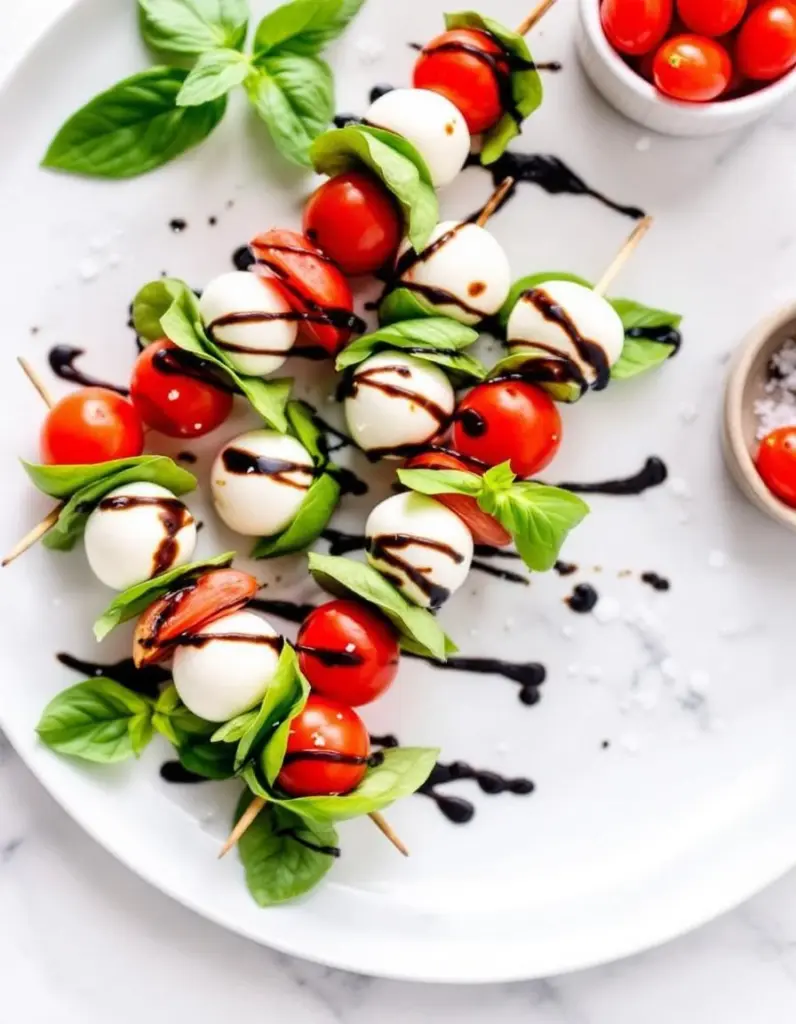
Making Caprese skewers is about the tactile act of threading each ingredient—tomatoes, mozzarella, basil—onto small skewers, feeling the weight and texture change with every addition. There’s a messy charm in handling the ingredients directly, especially when the tomato juices drip slightly onto your hands.
As you assemble, you’ll notice how the basil leaves soften just a bit from the moisture in the tomatoes, and the mozzarella becomes slightly sticky against your fingers. Eating them involves biting through that firm exterior to find the oozy, fresh interior, a real hands-on experience from prep to plate.
The gentle squish of the cherry tomatoes as you thread them onto the skewers, feeling their firm yet yielding skin, sets the tone for the fresh, tactile experience of assembling this simple dish.
What goes into this dish
- Cherry tomatoes: I love the burst of acidity and sweetness—they squish just right when you bite into them. Skip if you prefer milder flavor, maybe use grape tomatoes for a less juicy bite.
- Fresh mozzarella: Soft, milky, and slightly elastic. If you can’t find mini balls, sliced fresh mozzarella works—just cut into small chunks and expect a slightly firmer bite.
- Fresh basil leaves: The aromatic punch here is key. If basil’s scarce, try oregano or thyme for a different herbal note, but basil really brightens the skewers.
- Extra virgin olive oil: Drizzle generously for that fruity, peppery snap. If you want a milder taste, go for a light, neutral oil, but skip the rich oil at your peril.
- Balsamic glaze: Adds a sweet-tangy finish with a glossy look. If out, a splash of good balsamic vinegar with a pinch of sugar works—though it won’t be as sticky.
- Salt and pepper: A pinch of flaky sea salt and freshly cracked pepper enhance all the flavors. Skip if you’re watching your sodium intake, but don’t skip pepper—it adds a subtle heat.
- Optional: a few red pepper flakes for heat or a drizzle of honey for sweetness—small touches that change the vibe, so tweak based on your mood.
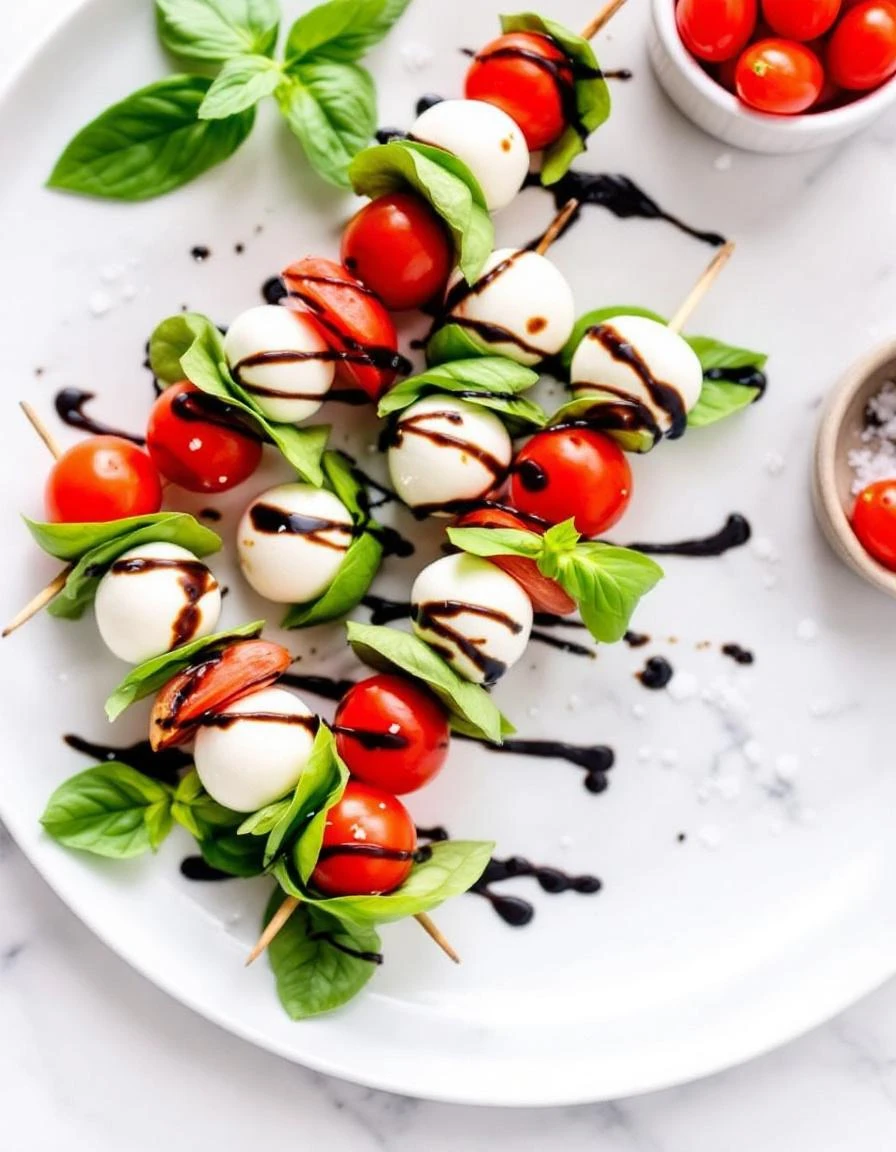
Caprese Skewers
Ingredients
Equipment
Method
- Arrange all your ingredients within easy reach. Thread a cherry tomato onto a skewer, feeling its firm yet yielding skin.
- Add a piece of mozzarella next to the tomato, pressing gently so it stays in place and feels soft against your fingers.
- Follow with a fresh basil leaf, gently folding it onto the skewer, allowing its aromatic scent to mingle with the other ingredients.
- Continue threading the ingredients onto each skewer, repeating the pattern until all are assembled, feeling the textures change with each addition.
- Place the finished skewers on a serving platter, arranging them neatly for a colorful display.
- Drizzle the olive oil over the skewers, watching the glossy liquid catch on the ingredients and enhance their shine.
- Finish with a drizzle of balsamic glaze, adding a sweet-tangy gloss that creates a beautiful contrast with the fresh ingredients.
- Season lightly with salt and freshly cracked pepper to enhance all the flavors, tasting as you go for balance.
- Serve immediately to enjoy the vibrant colors, fresh aroma, and delightful textures of these simple, hands-on skewers.
Common Mistakes and How to Fix Them
- FORGOT to tighten skewers, causing ingredients to slip off—use a firmer hold or smaller pieces.
- DUMPED all ingredients at once—add tomatoes, mozzarella, basil gradually for even distribution.
- OVER-TORCHED the basil—add it last, off heat, to keep its aroma vibrant and fresh.
- SKIPPED seasoning—season each layer lightly to enhance flavor without overpowering the freshness.
Make-Ahead and Storage Tips
- Assemble the skewers a few hours ahead; keep refrigerated to prevent ingredients from drying out.
- Cover loosely with plastic wrap; ingredients stay fresh and flavors meld without becoming soggy for up to 4 hours.
- Mozzarella and basil are best added just before serving if you want peak freshness and aroma.
- Store leftover skewers in an airtight container in the fridge for up to 24 hours; the basil may lose some brightness.
- Refrigerated skewers can be brought to room temperature for 10-15 minutes before serving to restore some of their original zest.
- If making ahead more than a day, remove basil to prevent wilting, then reassemble with fresh leaves to revive flavor and appearance.
FAQs
1. How do I pick the best tomatoes?
The cherry tomatoes burst with a juicy, slightly tangy flavor that hits your tongue immediately, making each bite lively and fresh.
2. What mozzarella works best?
Fresh mozzarella should feel soft and springy, almost like a gentle squeeze. It’s mild, milky, and melts slightly when you bite into it.
3. Can I use dried basil?
Basil leaves should be fragrant and bright green. When bitten, they release a crisp, aromatic burst that complements the acidity of the tomatoes.
4. What kind of olive oil is ideal?
Olive oil should smell fruity and peppery, coating your tongue with a slick of richness. Use good-quality oil for the best flavor.
5. Can I substitute with vinegar?
Balsamic glaze adds a sweet, vinegary gloss with a sticky texture that coats your palate, balancing acidity with a smoky sweetness.

I’m Mahek Manchanda, the curious heart behind Dramatically Stirring. Before this space existed, my life revolved around kitchens that were loud, demanding, and endlessly alive. I didn’t arrive at cooking through a single dramatic moment.