
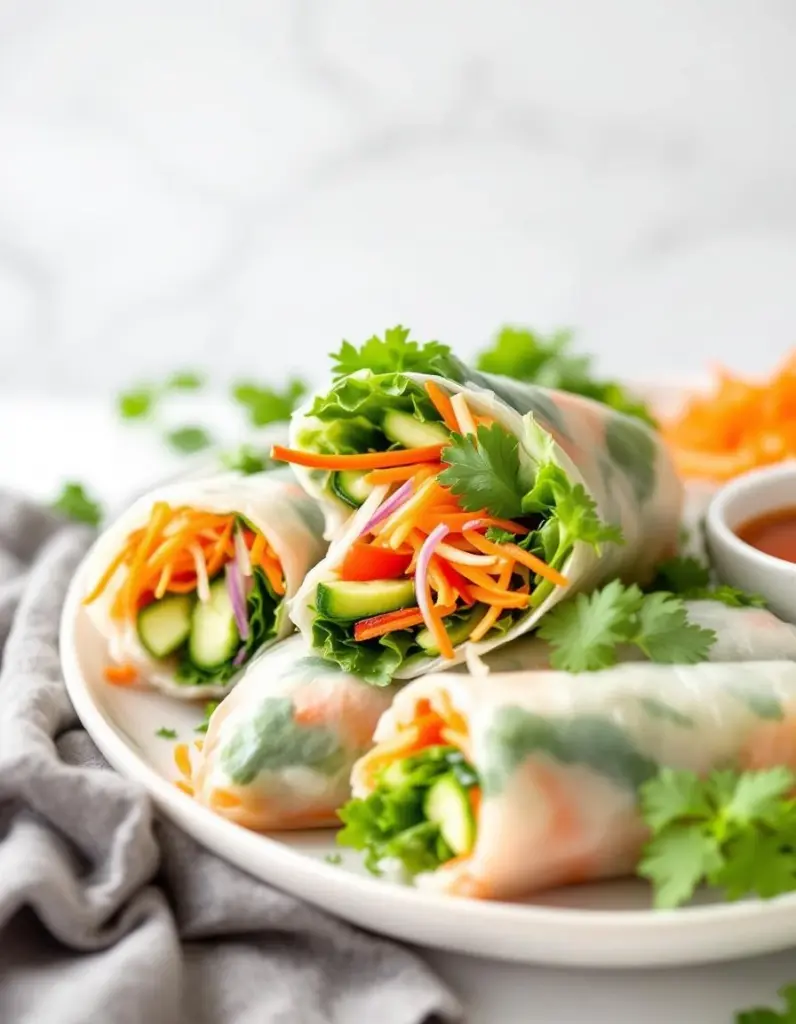
Filling a shallow dish with warm water, I carefully dip each rice paper, feeling the slight resistance as it softens. It’s a messy process—water drips everywhere, and your fingertips get sticky—but that’s part of the charm.
Lining up julienned vegetables and herbs, I prep each component with a quick chop, knowing they’ll be tucked into the rice paper in moments. It’s a slow assembly, but the crunch of each bite makes all the fuss worthwhile.
The crunch of fresh vegetables slipping between the rice paper, each bite crackling with crispness.
Key Ingredients & Variations
- Rice paper: First-time I tried these, I felt like I was wrestling with wet tissue—slippery and delicate. Skip the struggle by soaking briefly in warm water until just pliable, then handle with gentle care, feeling that slight chewiness.
- Carrots: I julienne them thin—crunchy and sweet, with a hint of earthiness. Swap with daikon for more bite or skip if you prefer milder flavors; just keep them crisp and bright.
- Cucumbers: Crisp, cool, and juicy—these provide a refreshing bite that cuts through richer fillings. Use English cucumbers for less seediness or peel if the skin’s thick; just keep the crunch.
- Herbs (mint, cilantro): Aromatic and fresh, they bring vibrancy. If cilantro’s not your thing, basil or Thai basil works well too—just fresh and fragrant, no dull flavors.
- Vermicelli noodles: Soft, neutral, with a slight chew—soaking them softens and makes rolling easier. Rice sticks can be swapped for glass noodles if you like a slightly different texture, but keep them tender.
- Optional protein (shrimp, tofu): I like shrimp for a sweet, briny punch—quickly boiled and sliced. Tofu? Firm, pressed, and pan-fried until golden—adds a hearty, neutral element that absorbs flavors.
- Dipping sauce: Usually fish sauce, lime, sugar, chili—bright, punchy, with a spicy kick. For vegan, try soy sauce with a squeeze of lime and a dash of chili oil—still lively but plant-based.
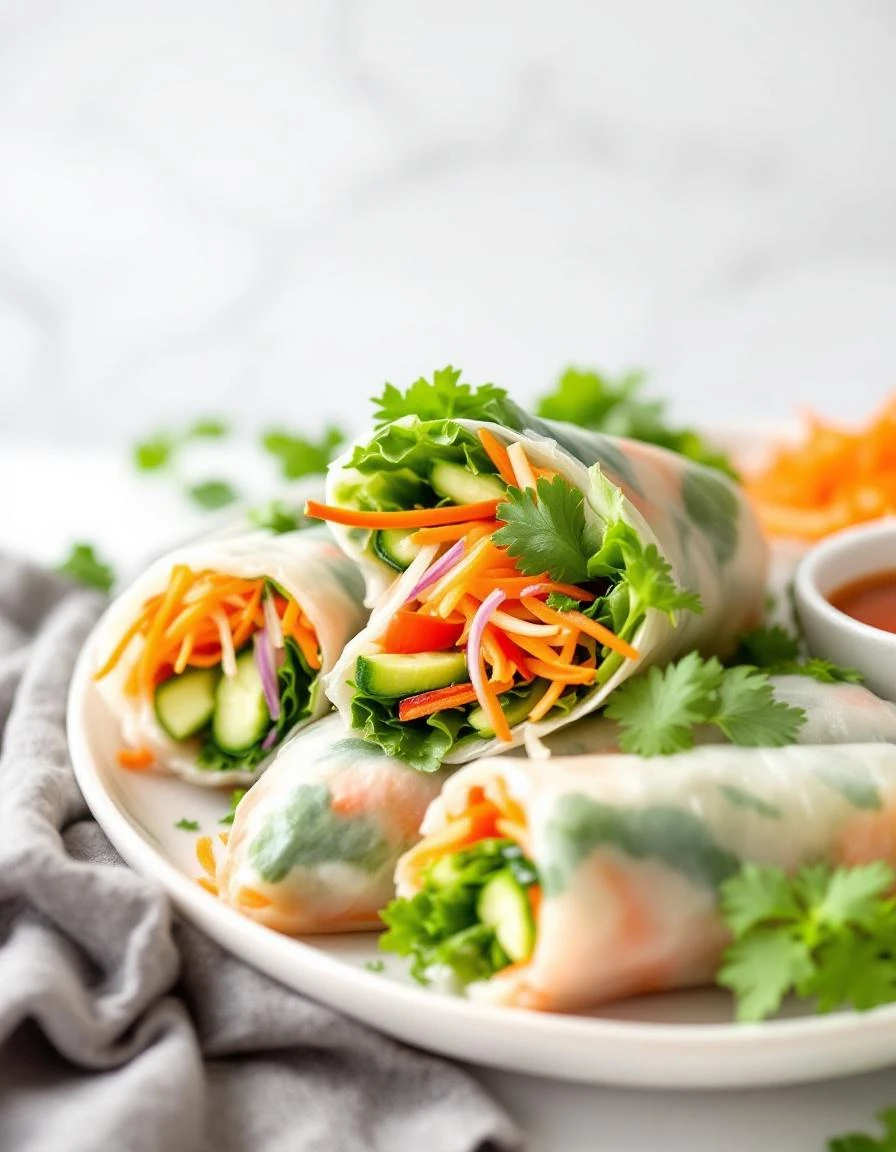
Fresh Vegetable Spring Rolls
Ingredients
Equipment
Method
- Fill a large shallow dish with warm water and set it nearby. Prepare all your fillings by julienning carrots, slicing cucumber, and chopping herbs. Cook and slice shrimp if using.
- Submerge one rice paper sheet into the warm water, gently swirling until it becomes soft and pliable, about 10-15 seconds. Carefully lift it out, letting excess water drip off, and lay it flat on a clean surface.
- Place a small handful of cooked vermicelli noodles near the center of the rice paper. Arrange a few julienned carrots, cucumber slices, fresh herbs, and optional shrimp on top of the noodles.
- Fold the bottom edge of the rice paper over the fillings, then fold in the sides, and gently roll up from the bottom to seal everything inside. Repeat with remaining rice papers and fillings.
- Arrange the finished rolls on a platter. Cover with a damp towel if not serving immediately to keep them fresh and prevent drying out.
- Serve the spring rolls with a vibrant dipping sauce, and enjoy the crisp, refreshing bites with every chew.
Common Mistakes and How to Fix Them
- FORGOT to soak rice paper thoroughly—leads to tearing. DUNK longer for pliability.
- DUMPED in boiling water instead of warm—causes sogginess. Use warm water, gentle touch.
- OVER-TORCHED vegetables—lose crunch and flavor. Keep quick and watch closely.
- MISSED drying herbs—wilts and loses aroma. Pat gently with paper towels after washing.
Make-Ahead and Storage Tips
- Prepare all vegetable fillings and herbs a day ahead; keep them wrapped tightly in the fridge to maintain crispness.
- Soak rice papers just before assembling; they keep best if used within 2 hours of soaking, don’t refrigerate soaked papers—they get sticky and tough.
- Store any cooked protein separately for up to 2 days in an airtight container to prevent sogginess until ready to roll.
- The flavors mellow slightly after a day; if making ahead, taste and adjust dipping sauce before serving.
- Refrigerate assembled rolls covered with a damp towel for up to 4 hours; avoid freezing as texture suffers upon thawing.
- Reheat in a warm, dry skillet for a minute if you want a slight warmth but no crunch loss; best eaten fresh for that crisp bite.
FAQs
1. How do I soften rice paper without tearing?
Use warm water to soak the rice paper just until it’s pliable but not too soft. Feel that slight resistance—too soft and it tears when rolling.
2. How can I prevent soggy vegetables in my rolls?
Keep your fillings crisp and dry before wrapping. If they’re wet or soggy, the roll will be limp and sticky.
3. What’s the best way to prepare vegetables for crispness?
Cut vegetables thin and uniform for even crunch and easy rolling. Thick chunks won’t stay wrapped well and lose their snap.
4. How long can I store vegetable spring rolls?
Refrigerate assembled rolls tightly wrapped for up to 4 hours. For longer storage, freeze unassembled components separately—rolls get soggy if left too long.
5. Can I reheat spring rolls without losing crunch?
Reheat in a dry skillet for a quick warm-up, just enough to take the chill off. The crunch might soften slightly but keep a good snap with gentle heat.

I’m Mahek Manchanda, the curious heart behind Dramatically Stirring. Before this space existed, my life revolved around kitchens that were loud, demanding, and endlessly alive. I didn’t arrive at cooking through a single dramatic moment.