

Getting vegetable tempura right means standing close to the stove, batter in one hand, vegetables ready in the other. The sound of oil bubbling as you slide each piece in is loud, almost like a small explosion of heat and moisture.
You’ll be flipping and fishing out fried veggies, so keep your workspace close and your tools handy. Expect splatters, a quick clean-up, and a pile of crispy bits that’s worth every splash.
The crack of the tempura batter as it hits the hot oil, quick and sharp, echoing in the quiet kitchen, signaling that perfect, crispy fry.
What goes into this dish
- Carrots: I like them thin and crispy, almost like matchsticks. Skip if you prefer softer or thicker slices, but aim for that satisfying crunch with each bite, the sweet earthiness peeking through the batter.
- Sweet potatoes: Their orange hue turns vibrant when fried, adding a smoky sweetness. Use regular potatoes if you want a more neutral, starchy crunch that holds up well in hot oil.
- Zucchini: I keep the slices fairly thin—about a quarter inch—to prevent sogginess. If you want a lighter bite, try yellow squash for a milder flavor with a tender texture.
- Bell peppers: I prefer red or orange for color, and I slice them into strips, so they fry quickly and stay crisp. Skip if you dislike a slightly bitter edge or prefer milder veggies.
- Green beans: For a snap of freshness, I use whole, fresh green beans. They stay bright and crunchy, but frozen can work if you blanch them first—just watch for excess water.
- Batter: I mix ice-cold sparkling water with flour and a pinch of cornstarch—gives that airy, light crispness. You can swap in tempura or rice flour for extra crunch, but skip the baking soda if you want less puff.
- Oil: Use a neutral oil with a high smoke point—like vegetable or canola—so it crackles reliably. If you only have olive, it’ll work but might impart a faint aroma and softer finish.
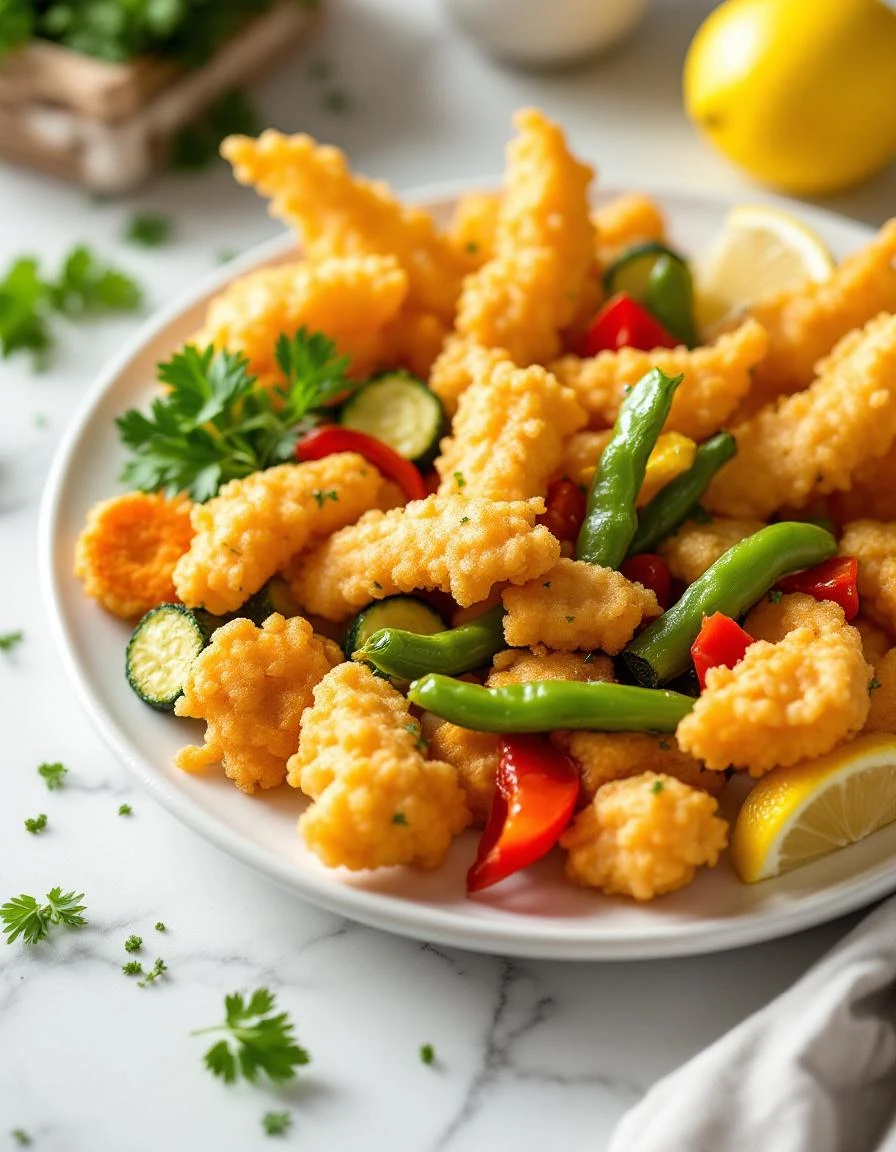
Vegetable Tempura
Ingredients
Equipment
Method
- Gather all your sliced vegetables and keep them refrigerated until ready to fry. In a mixing bowl, whisk together the sifted flour and cornstarch, then pour in the ice-cold sparkling water. Gently fold the mixture with chopsticks or a spoon until just combined; the batter should be slightly lumpy and very cold. Rest the batter while you heat the oil in a deep skillet over medium-high heat until it reaches about 350°F (175°C).
- Once the oil is hot, use a slotted spoon or spider to carefully lower a few pieces of vegetables into the batter, ensuring they are lightly coated. Gently lift them out, allowing excess batter to drip off, then carefully place them into the hot oil. Fry in batches to avoid overcrowding, maintaining steady heat, and listen for a crisp, crackling sound as they hit the oil.
- Fry the vegetables, turning occasionally with a slotted spoon, until they are golden brown and crispy—about 2 to 3 minutes per batch. Use a slotted spoon to transfer them to a paper towel-lined plate to drain excess oil. Continue with the remaining vegetables, maintaining the oil temperature and adjusting heat as needed.
- Once all the tempura is cooked, arrange them on a serving platter. Serve immediately for the best crispy texture, or keep warm in a low oven if needed. Enjoy this vibrant, crunchy dish with dipping sauce or as part of a larger meal.
Notes
Common Tempura Mistakes & How to Fix
- FORGOT to keep batter cold; FIX by chilling ingredients before mixing.
- DUMPED too much batter on veggies; FIX by coating just enough for a thin layer.
- OVER-TORCHED the oil; FIX by maintaining steady, medium-high heat and watching carefully.
- MISSED to drain excess oil; FIX by placing tempura on paper towels immediately after frying.
Make-Ahead and Storage Tips
- Prep the vegetables a few hours ahead; keep them refrigerated in airtight containers to maintain crispness.
- Batter can be made a day in advance; store covered in the fridge, but give it a gentle stir before using.
- Fried tempura tastes best fresh, but leftovers can sit in the fridge up to 24 hours; reheat in a hot oven for crunch.
- Reheating in the microwave softens the batter; for best texture, reheat in a hot oven or air fryer, watching for over-browning.
- Vegetables may lose some crispness over time; serve immediately for that satisfying crunch, or re-crisp in a hot oven.
FAQs
1. How do I tell if the oil is hot enough?
The batter should crackle gently when it hits the oil, signaling it’s hot enough. If it sizzles loudly or smokes, the oil’s too hot or not hot enough—adjust and test again before frying more veggies.
2. Why are my tempura veggies soggy or greasy?
Vegetables should be crisp and shiny after frying, with a light, airy batter. If they feel soggy or greasy, your oil might be too cold or the batter too thick—try adjusting the heat or coating thinner.
3. How can I prevent sogginess after frying?
Use a slotted spoon or spider to lift out the veggies gently. Let excess oil drip back into the pan, then transfer to paper towels. You want a quick, gentle lift to keep the crunch intact.
4. Can I reheat tempura without losing crunch?
Best enjoyed immediately when the batter is still crisp and the veggies are vibrant. Reheat in a hot oven or air fryer for a few minutes—listen for that initial crackle and watch for browning.
5. Can I make tempura in advance?
Yes, you can prep the vegetables and batter ahead of time, storing them in the fridge. Fry in batches just before serving for that fresh, crispy texture and bright flavor that’s hard to beat.

I’m Mahek Manchanda, the curious heart behind Dramatically Stirring. Before this space existed, my life revolved around kitchens that were loud, demanding, and endlessly alive. I didn’t arrive at cooking through a single dramatic moment.